

HDPE Shade Sail
Product Overview
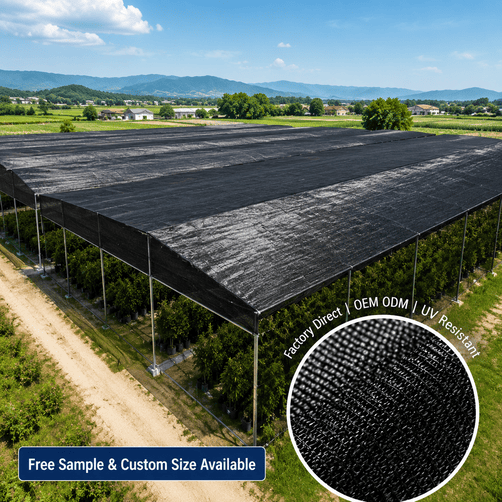
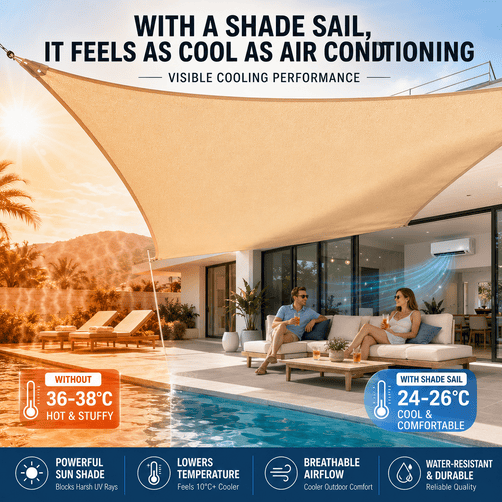
The HDPE shade sail is an outdoor product with multifunctional shading and protective capabilities. Its core material is virgin high-density polyethylene (HDPE) enhanced with UV-stabilizing agents, crafted using a monofilament flat-filament cross-weaving process. The fabric weight ranges from 50 to 150 gsm, enabling adjustable shading rates between 25% and 95%, with precisely controllable light transmission. It effectively blocks over 90% of harmful ultraviolet rays while reducing ambient temperatures by 5–15°C, all while ensuring air circulation to prevent heat buildup. After UV aging tests, its outdoor service life can reach 3–8 years, with a tensile strength of ≥100 N/5 cm and tear resistance of ≥50 N. Compliant with agricultural netting industry standards, it offers various options such as edge banding, perforation, and color customization, making it widely applicable across multiple scenarios including agricultural cultivation, horticultural care, and outdoor sun protection.
Key Features and Advantages
1. Adjustable shading rates across the full range, precisely tailored to meet the light requirements of different crops and settings, avoiding both excessive and insufficient shading. Whether it’s the low-light needs of shade-loving crops or the moderate shading protection required by sun-loving varieties, you can select the appropriate shading rate to provide optimal lighting conditions for crop growth, while also satisfying diverse outdoor sun-protection needs.
2. Made from virgin HDPE combined with an anti-aging formula, this product exhibits exceptional weather resistance, with an outdoor lifespan of up to 8 years. The added UV stabilizers effectively slow down material degradation, significantly extending its durability against harsh outdoor conditions like sun exposure, rain, and wind compared to ordinary shade nets, thereby reducing replacement frequency.
3. Breathable yet water-resistant, its mesh structure ensures excellent air circulation, providing cooling without hindering plant photosynthesis. The monofilament flat-filament cross-weave design leaves ample gaps, allowing free airflow—reducing ambient temperature without impeding gas exchange, thus preventing heat-related diseases in crops and avoiding additional weight and damage caused by water accumulation on the fabric.
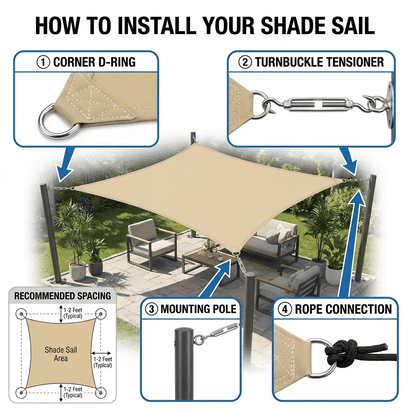
4. Lightweight and easy to install, it can be cut and joined to suit various greenhouse, courtyard, and construction site applications. With its minimal weight, it requires no complicated installation tools, enabling quick setup, and can be customized to fit specific space dimensions through cutting or splicing, flexibly adapting to different site requirements.
5. Cost-effective, available in large rolls at competitive prices, ideal for large-scale agricultural and engineering projects. Standard export factory pricing ranges from $0.18 to $0.40 per square meter, or $18 to $40 per standard roll (2 m × 50 m), with a minimum order quantity of 5,000 m² or 100 rolls. Bulk purchasing offers even lower unit costs, meeting the demands of large-scale planting and construction operations.
Technical Specifications
1. Core Material: Virgin high-density polyethylene (HDPE) with UV-stabilizing additives
2. Weaving Process: Monofilament flat-filament cross-weaving
3. Fabric Weight: 50–150 gsm
4. Shading Range: 25%–95%
5. Outdoor Service Life: 3–8 years
6. Tensile Strength: ≥100 N/5 cm
7. Tear Resistance: ≥50 N
8. UV Blocking Rate: Over 90%
9. Temperature Reduction: 5–15°C
10. Compliance: Meets agricultural netting industry standards
11. Factory Pricing: $0.18–$0.40 per square meter, or $18–$40 per standard roll (2 m × 50 m)
12. Minimum Order Quantity: 5,000 m² or 100 rolls
Target Customer Groups
1. Overseas farmers, farm owners, and greenhouse operators: These users require suitable lighting and temperature conditions for large-scale crop production, and the HDPE shade sail’s full-range shading capability, long service life, and cost-effectiveness perfectly align with their extensive farming needs.
2. Horticultural nurseries, flower-growing bases, and landscaping companies: Flowers and seedlings are highly sensitive to light and temperature; precise shading control helps these users cultivate higher-quality seedlings and plants, while the breathable design prevents heat-related diseases in flowers and young plants.
3. Outdoor goods wholesalers and cross-border e-commerce sellers: These customers seek cost-effective, versatile outdoor products that perform well across multiple scenarios, making the HDPE shade sail an excellent choice for bulk procurement and resale.
4. Construction contractors and dust-control/sun-protection teams working on job sites: Construction sites need to lower outdoor working temperatures while controlling dust, and the HDPE shade sail’s cooling effect and breathability enhance worker comfort while providing some dust-reduction benefits.
5. Home gardening enthusiasts and balcony/rooftop growers: Limited space calls for flexible, compact shading solutions, and the HDPE shade sail’s cuttable and easy-to-install features meet the sun-protection needs of balconies, rooftops, and other small areas.
Application Scenarios
1. Greenhouse shading and cooling for vegetable cultivation and flower seedling production, protecting crops from intense sunlight. During peak summer hours, using an HDPE shade sail matched to the appropriate shading rate not only prevents leaf scorching but also lowers greenhouse temperatures, creating optimal growing conditions and reducing yield losses caused by extreme heat and strong light.
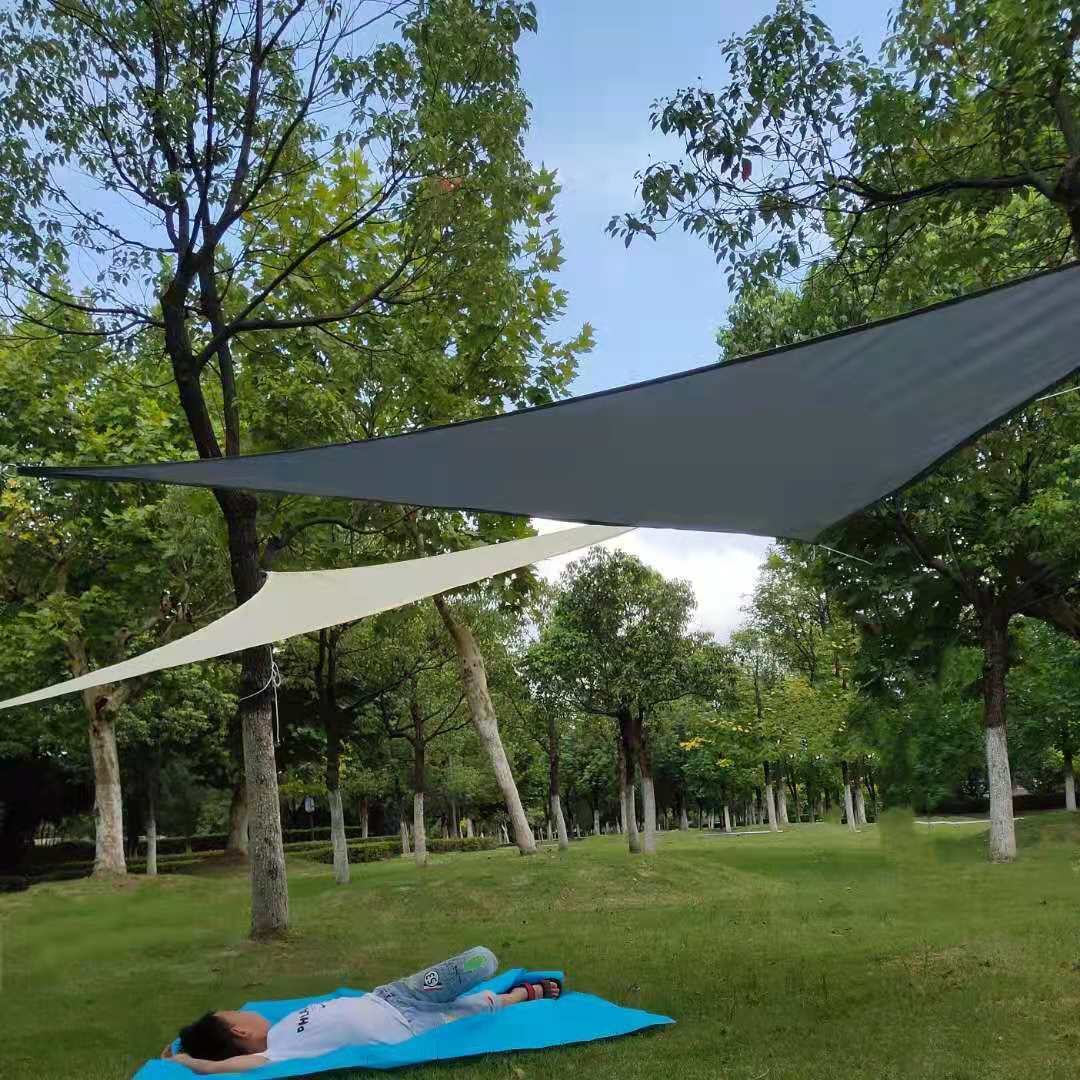
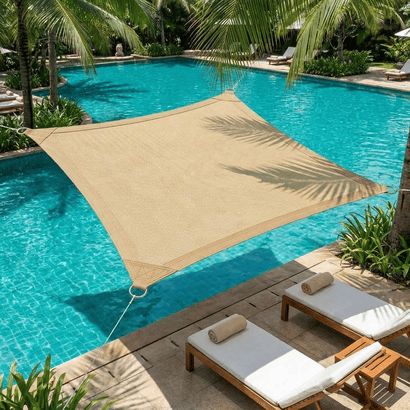
2. Outdoor sun protection for home balconies, rooftops, and courtyards, helping to cool indoor spaces. Installing a shade sail on balconies or rooftops effectively blocks direct sunlight, reduces temperatures on the balcony and adjacent rooms, enhances outdoor comfort, and provides protection for balcony-grown plants.
3. Dust control and worker heat relief at construction sites and municipal projects. Erecting an HDPE shade sail on-site creates shaded work areas, reducing the risk of heatstroke while minimizing dust dispersion and improving the overall construction environment.
4. Shading and cooling for aquaculture and poultry farming, improving breeding conditions. Setting up shade sails above fish ponds or poultry sheds lowers ambient temperatures, preventing overheating that could harm aquatic life or cause stress in poultry, thereby boosting survival rates.
5. Tree and plant shading maintenance for golf courses, parks, and landscaped areas. For newly transplanted trees or heat-sensitive plants, using an HDPE shade sail provides moderate shading protection, helping them adapt smoothly to their new environment and enhancing survival rates and overall care outcomes.
Solutions to Industry Pain Points
1. Addressing crop leaf scorching, yield loss, and even death caused by excessive sun exposure: The HDPE shade sail allows users to select the appropriate shading rate based on crop needs, effectively blocking intense sunlight and harmful UV rays, lowering ambient temperatures, and creating optimal growing conditions to minimize sun-related damage.
2. Solving the problem of excessively high outdoor temperatures in summer, rendering spaces unusable: This product reduces ambient temperatures by 5–15°C while maintaining air circulation, enhancing comfort and usability whether in construction zones or family courtyards.
3. Overcoming the limitation of conventional shade nets offering only a single shading rate, unable to accommodate varying light requirements across different crops and seasons: With adjustable shading rates ranging from 25% to 95%, users can tailor the shade net to match specific crop types and seasonal changes, precisely meeting evolving lighting needs.
4. Tackling the issue of ordinary shade nets aging quickly, becoming prone to breakage, and requiring frequent replacements—which drives up planting and maintenance costs: Using virgin HDPE combined with an anti-aging formula extends the outdoor service life to 3–8 years, dramatically lengthening the usage cycle and reducing replacement frequency and long-term expenses.
5. Resolving the problem of non-breathable shade nets leading to heat buildup and crop disease outbreaks: The monofilament flat-filament cross-weave design ensures continuous air circulation, providing cooling while preventing heat accumulation, thus reducing heat-related illnesses and improving crop health.
Core Value of the Product
1. Precise control of light and temperature, boosting crop yields and quality, and increasing farming income: By selecting the right shading rate, the product creates optimal growing conditions, mitigating yield losses and quality declines caused by intense sunlight and high temperatures, thereby helping farmers improve economic returns.
2. Effectively lowering outdoor temperatures and enhancing the comfort and usability of outdoor spaces: Whether in construction zones or family outdoor areas, the shade sail reduces temperatures, allowing outdoor spaces to remain functional during summer and maximizing their utilization.
3. Long service life, reduced replacement frequency, and lower long-term costs: Compared to ordinary shade nets, its extended lifespan cuts down on procurement and replacement cycles, lowering overall long-term expenses.
4. Versatile applicability, addressing sun-protection needs across agriculture, horticulture, engineering, and households: One product covers multiple sectors, eliminating the need to purchase separate shade solutions for different scenarios and simplifying the procurement process.
5. Environmentally friendly and non-toxic, leaving no soil or environmental pollution, fully compliant with green farming principles: Made from virgin HDPE, it is eco-friendly and non-toxic, causing no harm to soil or the environment after use, aligning with the concepts of green farming and environmentally responsible construction.
Frequently Asked Questions (FAQ)
Q1: Can the shading rate of the HDPE shade sail be precisely adjusted?
A: Yes, the product offers adjustable shading rates ranging from 25% to 95%. You can choose the appropriate rate based on crop type and intended use, ensuring precise alignment with your lighting needs.
Q2: How long is the outdoor service life of this shade sail?
A: Following UV aging tests, the product’s outdoor lifespan can reach 3–8 years. Actual duration depends on usage conditions and maintenance; under normal outdoor circumstances, proper use can extend its service life considerably.
Q3: What is the minimum order quantity?
A: The MOQ is 5,000 m² or 100 rolls. You can purchase by the square meter or by standard roll (2 m × 50 m); bulk orders offer better value.
Q4: Can the HDPE shade sail be cut and joined?
A: Yes, the product features a lightweight design, allowing you to customize its size through cutting or splicing to suit specific space requirements, making installation convenient and flexible.
Q5: Does this shade sail comply with relevant industry standards?
A: Yes, it meets agricultural netting industry standards, uses environmentally friendly and non-toxic materials, and satisfies all performance criteria, making it safe for use in agricultural cultivation, horticultural care, and similar applications.